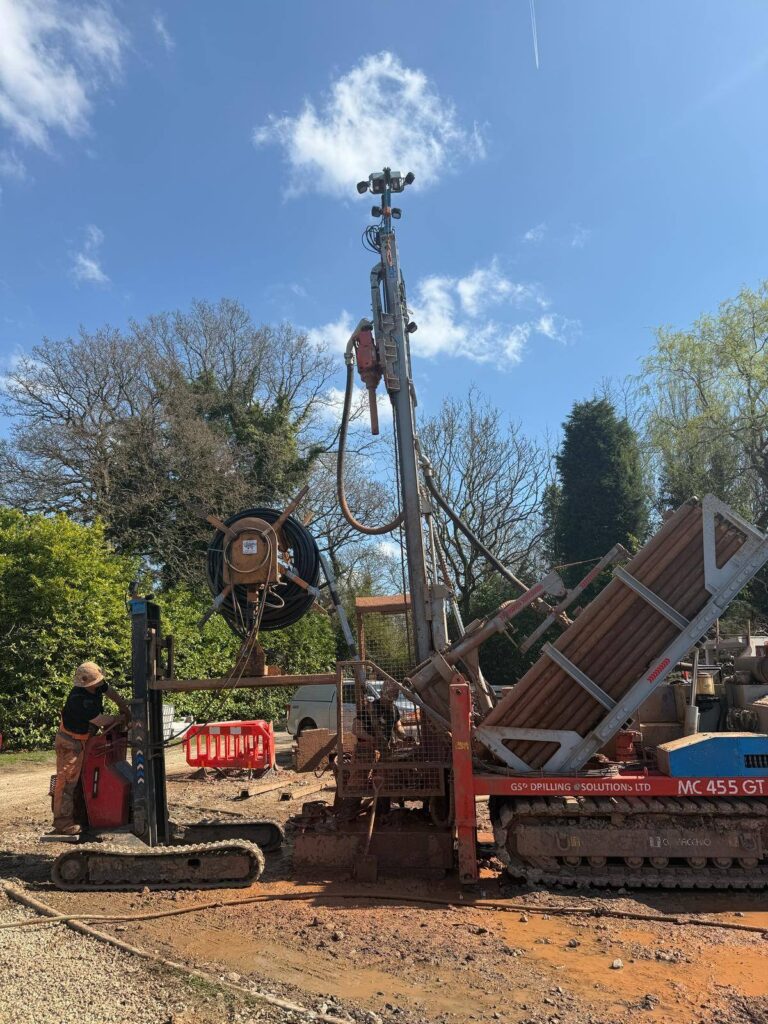
Water Wells
Private water borehole drilling for an independent water supply across homes, farms, and rural businesses.
Service
Private Water Boreholes for an Independent Supply
A private water well taps into the natural aquifer beneath your land, giving your property an independent water supply that does not depend on the mains. With proper treatment, the water can be used for drinking, irrigation, livestock, and general use across the property.
Water borehole drilling is one of our core service lines. We carry out the drilling, casing, and installation for domestic, agricultural, and commercial water supply projects, with regulatory guidance provided throughout.
Homeowners
Farms
Equestrian
Rural Business
Commercial
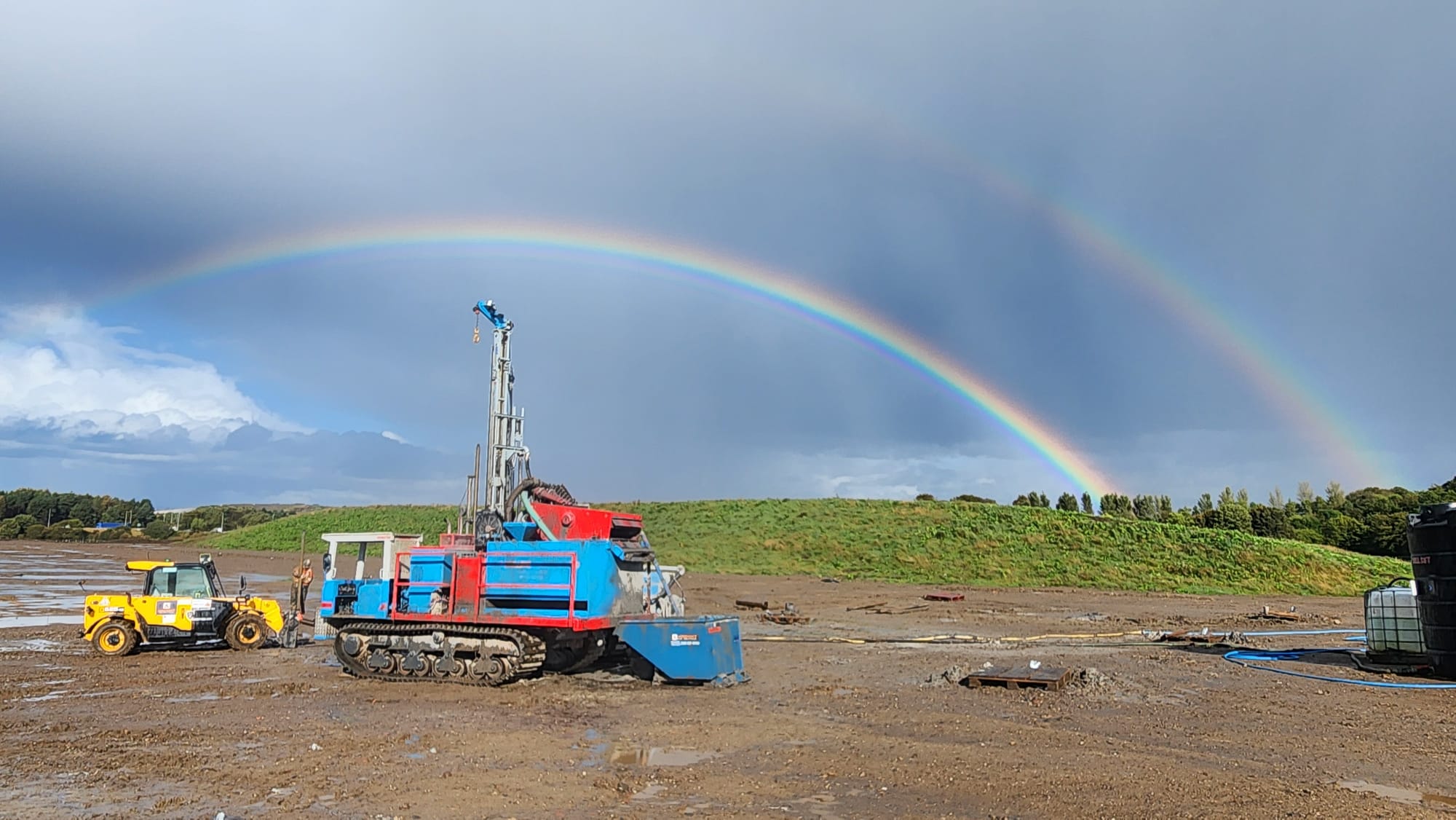
Project Types
Domestic and Agricultural Water Supply
Water borehole projects range from a single domestic supply for a rural home to high-yield commercial and agricultural installations. The right approach depends on your usage, the local geology, and the regulatory requirements that apply to your site.
Domestic Water Boreholes
An independent water supply for residential properties. Reduces or eliminates mains water charges over time. Depth and yield depend on local geology, which we assess at the outset before quoting.
Agricultural and Commercial
Higher-yield boreholes for farms, equestrian properties, smallholdings, and commercial premises. Suitable for irrigation, livestock supply, and process water. We will advise on abstraction licence requirements where they apply.
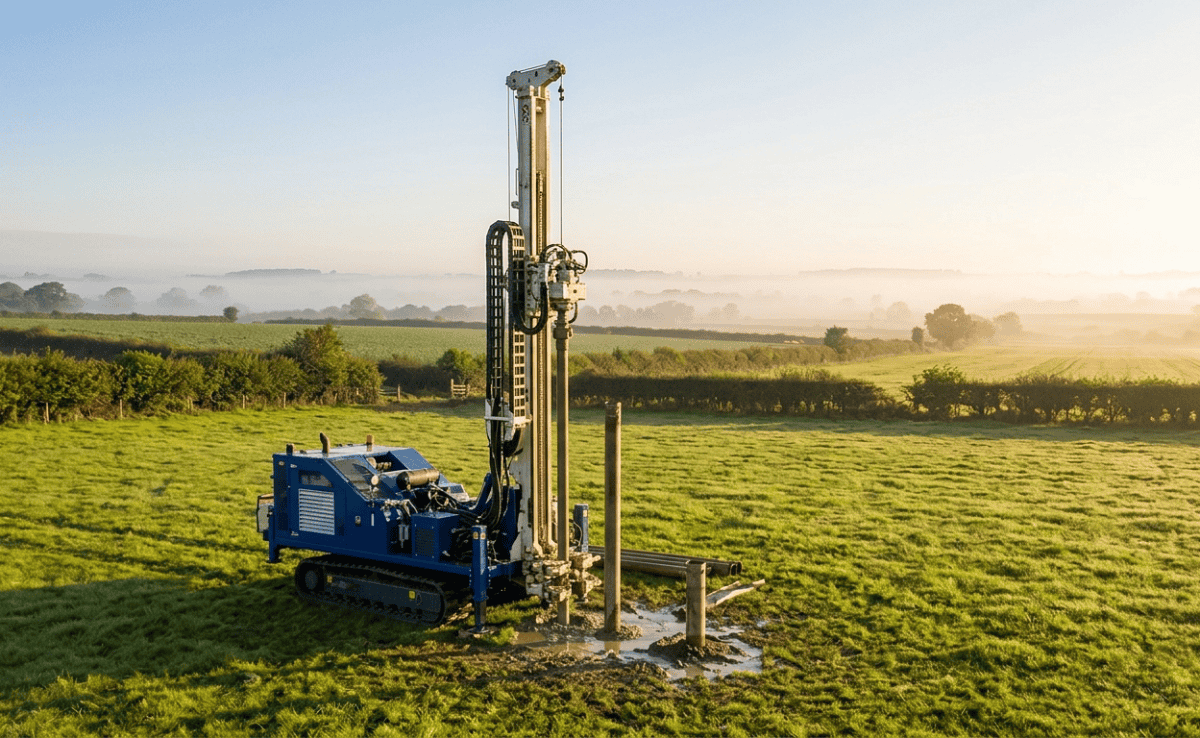
Standard on Every Water Well Project
Every water borehole project we carry out includes the following as standard. The borehole drilling work is our specialism. Pump installation, water treatment, storage, and indoor plumbing are typically handled by a separate water systems specialist.
How a Project Works
Our Process
From initial enquiry through to handover, every water well project follows the same clear stages. Timescales vary by depth and geology, but most domestic installations are completed within four to six weeks from initial site visit through to commissioning.
Water Well Questions Answered
Common questions from homeowners, farms, and rural businesses considering a private water supply.
A water well, also known as a water borehole, is a vertical hole drilled into the ground to access groundwater stored in the natural aquifer beneath your land. A casing is installed to maintain the structural integrity of the well.
Once a pump and water system are installed by a water systems specialist, the borehole provides an independent water supply that reduces or eliminates reliance on the mains. With appropriate treatment, the water can be used for drinking, household use, irrigation, and livestock.
Groundwater is naturally stored in porous rock formations called aquifers, which sit at varying depths depending on the local geology. A water well is drilled down through the ground to reach this aquifer. Once the borehole is in place, a casing is installed to keep the walls stable and prevent surface contamination.
A pump is then installed by a water systems specialist, which draws water up to the surface and into the property’s plumbing.
Yield varies considerably depending on the local geology, aquifer characteristics, and the depth of the borehole. A typical domestic borehole can produce well in excess of the daily needs of a household. Higher-yield boreholes for agricultural or commercial use can produce significantly more, subject to the aquifer’s capacity.
Provided the borehole is properly designed and the aquifer is healthy, supply should be reliable year-round. The aquifer is replenished by rainfall and ground recharge, so it does not suffer the same droughts that affect surface reservoirs. Yield testing is typically carried out by the water systems specialist installing the pump and treatment infrastructure.
Groundwater from a properly installed and maintained borehole is generally of high quality, often cleaner than treated mains water. However, whether it can be used as drinking water without treatment depends on the local geology and any minerals or contaminants naturally present in the aquifer.
Every new borehole should be tested via chemical and biological water analysis before being used as a drinking water supply. Water sampling, testing, and any required treatment system (such as UV sterilisation or filtration) are handled by your water systems specialist.
The Drinking Water Inspectorate provides regulations and guidance on private water supplies in the UK.
A private water well offers several practical advantages over mains water:
Independence from mains water. Your property has its own dedicated supply, free from regional water company outages, supply restrictions, or hosepipe bans.
Lower long-term running costs. Once installed, the ongoing cost is largely just the electricity for the pump. There are no monthly mains water charges.
Reliable supply. Provided the aquifer is sound, the water table is not subject to the surface drought conditions that affect reservoirs.
Property value. Properties with an independent water supply, particularly in rural locations, often see a positive impact on resale value.
Suited to high-volume use. Farms, equestrian properties, and large gardens benefit considerably from removing the cost ceiling of metered mains water.
A properly drilled water borehole is a low-maintenance asset, but periodic checks and maintenance help keep it performing reliably over the long term. We offer ongoing borehole maintenance for both existing and new boreholes, including:
Down-hole camera inspections. A visual inspection every few years can identify any build-up, wear, or damage to the casing and address it before it becomes an issue.
Borehole cleaning and rehabilitation. Where build-up, silting, or wear has occurred, the borehole can often be cleaned and restored to working condition without needing to be replaced.
Annual water quality testing, pump servicing, filter changes, and indoor plumbing maintenance are typically handled by a water systems specialist rather than the drilling contractor.
If you have an existing borehole that needs attention, get in touch and we will tell you whether it is something we can help with.
Most domestic water boreholes do not require planning permission. However, there are several regulatory requirements to be aware of:
Borehole notification. Any new borehole must be notified to the British Geological Survey, who maintain a national record of subsurface drilling.
Abstraction licence. If your borehole abstracts more than 20,000 litres per day (approximately 20 cubic metres), you need an abstraction licence from the Environment Agency. Most domestic uses fall well below this threshold, but larger agricultural or commercial uses often need one.
Drinking Water Regulations. If the borehole supplies drinking water, the supply falls under the Private Water Supplies Regulations, which require periodic water quality testing.
Site-specific considerations. Listed buildings, conservation areas, or sites near sensitive environments may have additional planning considerations. We recommend checking with your local planning authority if you have any concerns.
Talk to Us About Your Project
Specialist drilling for renewable heating, water supply, and ground investigation. Working with installers, contractors, and private clients across the UK.