Ground Source Heat Pumps
Specialist borehole drilling for ground source heat pump systems across residential, commercial, and agricultural projects.
Service
Borehole Drilling for Ground Source Heat Pumps
Ground source heat pump systems work by transferring heat from beneath the ground into your property using a network of pipes filled with a water and antifreeze mixture. The borehole is the foundation of the system. Drill it correctly and the system performs efficiently for decades. Get it wrong and the whole installation suffers.
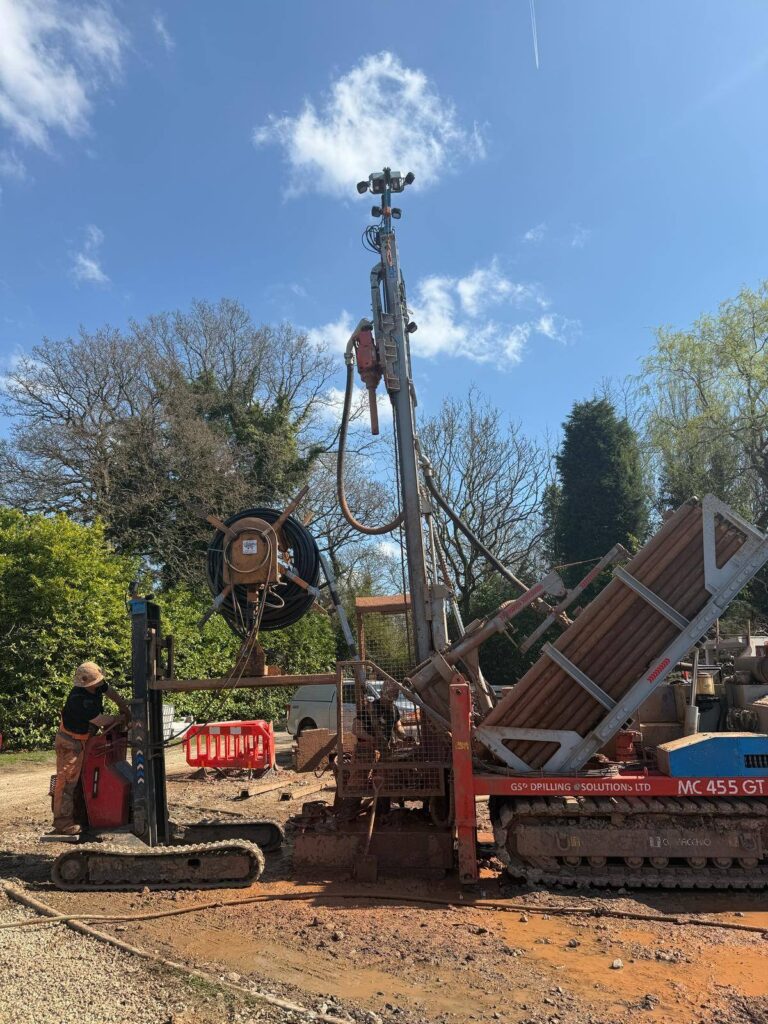
We work directly with heat pump installers, groundworks contractors, and private clients to deliver the borehole drilling element of GSHP installations. Every job is completed to the installer’s specification, pressure tested before we leave site, and supplied with a drilling log and pressure test certificate on completion.
Homeowners
Heat Pump Installers
Architects
Project Managers
Developers
Agricultural
Installation Types
specialist drilling services
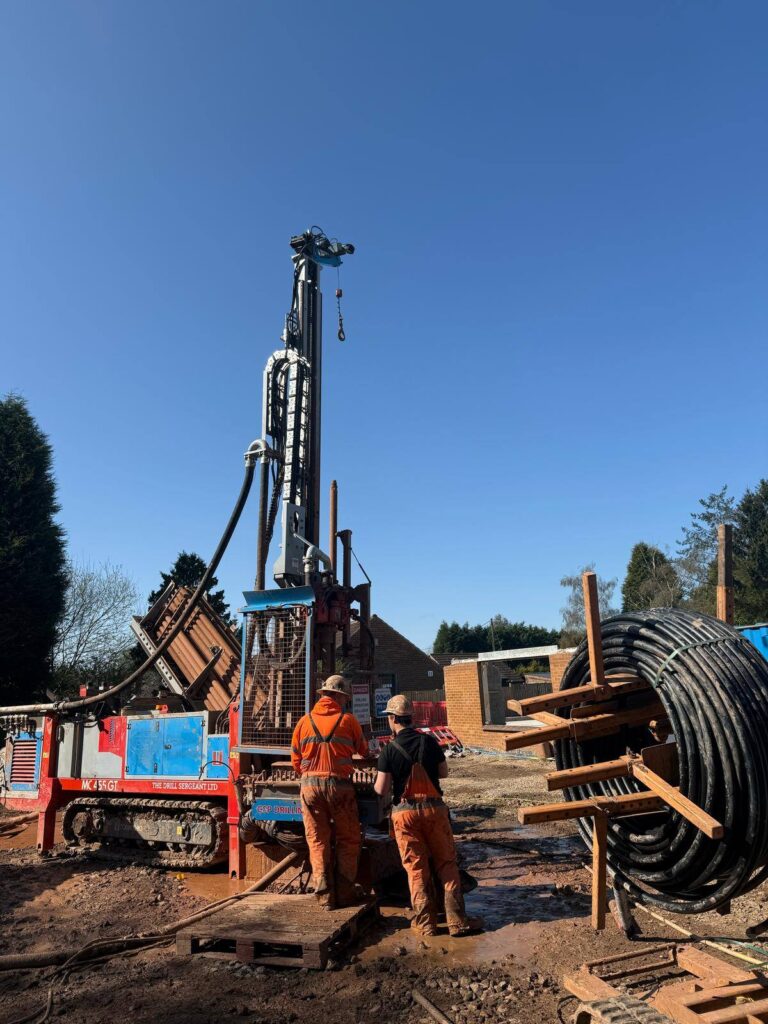
Most GSHP installations in the UK use a closed loop system. We can also drill for open loop systems where ground conditions and Environment Agency consents allow.
Closed Loop Boreholes
Vertical boreholes drilled to between 80 and 200 metres depending on heating load and ground conditions. U-loop pipe is installed and the borehole grouted from the base upward using thermal grout to maximise ground contact. The most common borehole type for residential and commercial GSHP installations.
Open Loop Systems
Where ground conditions are suitable and Environment Agency consents are in place, open loop systems draw directly on groundwater for higher potential efficiency. These require more detailed feasibility work upfront. We can advise on viability as part of the initial project discussion.
Standard on Every GSHP Project
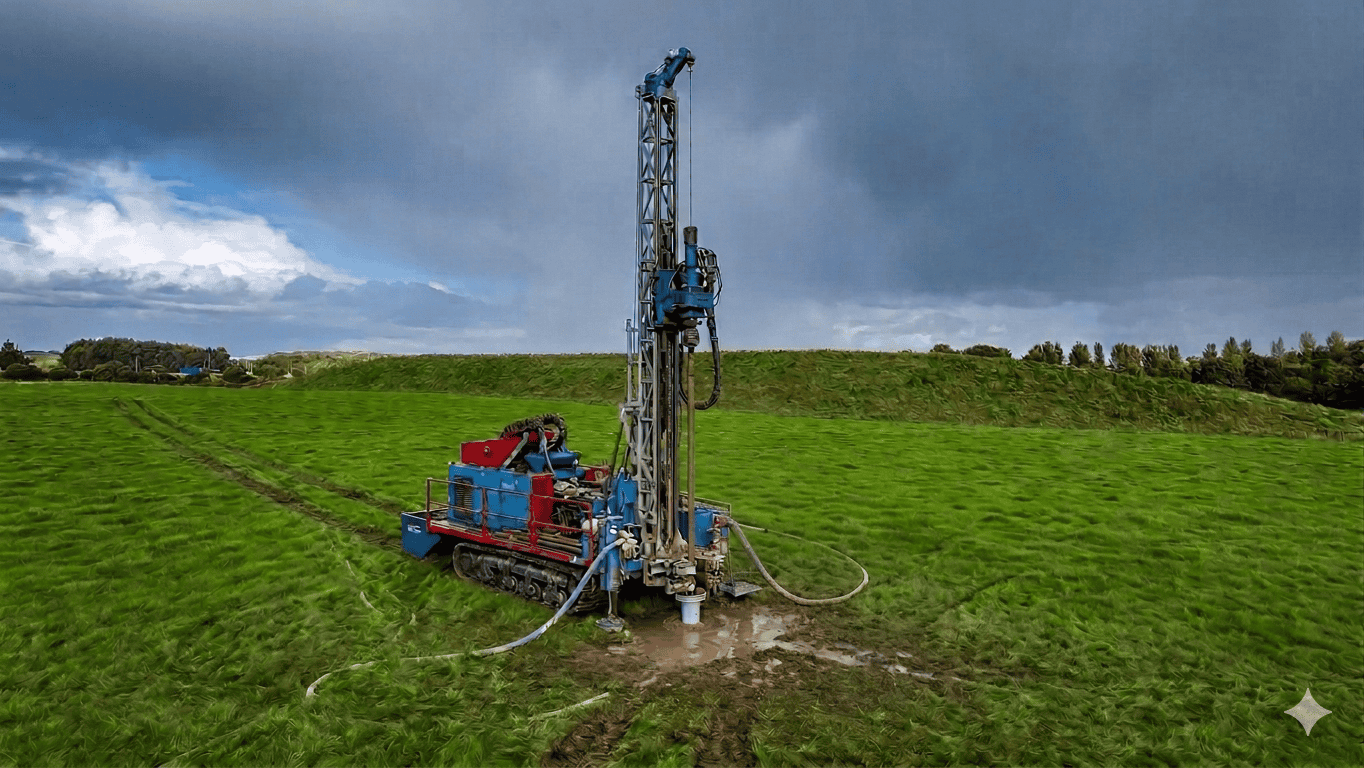
Every borehole we drill for a GSHP installation includes the following as standard. Additional services such as horizontal trenching, manifold connection, or coordination with the heat pump installer can be discussed at quotation stage.
Whats next
Our Process
From initial enquiry through to handover, every project follows the same clear stages. Most domestic projects are completed within two to three days on site, weather and ground conditions permitting.
GSHP Questions Answered
Common questions from homeowners, installers, and developers considering a ground source heat pump installation.
A ground source heat pump is a low-carbon heating system that extracts naturally occurring heat from the ground and uses it to provide space heating and hot water for a property. The ground stays at a relatively stable temperature year round, which makes it a reliable source of heat even in winter.
The system uses a network of underground pipes (the ground loop) to transfer heat into a heat pump unit inside the property, where it is upgraded to a usable temperature for radiators, underfloor heating, and hot water cylinders.
For a vertical GSHP installation, one or more boreholes are drilled into the ground, typically to depths between 80 and 200 metres. A U-shaped loop of polyethylene pipe is inserted into each borehole, then the borehole is filled with thermal grout from the base upward to maximise ground contact and heat transfer.
A water and antifreeze mixture is then circulated through the loop. As it flows through the pipe it absorbs heat from the surrounding ground, which is then concentrated by the heat pump unit and used to heat the property.
Ground source heat pumps offer several advantages over traditional gas or oil heating systems:
Lower running costs. GSHPs typically deliver three to four units of heat for every unit of electricity used, making them significantly more efficient than direct electric heating and competitive with gas.
Low carbon. No combustion takes place on site, so there are no carbon emissions from the heating itself. As the UK grid decarbonises, the system becomes cleaner over time.
Long lifespan. The ground loop typically lasts 50 years or more, often outliving the heat pump unit itself. This is a long-term investment in the property.
No fuel deliveries. No need for oil tanks, LPG cylinders, or gas connections. Useful for rural properties off the gas grid.
Quiet operation. The heat pump unit produces less noise than a typical boiler.
Costs vary considerably depending on the size of the property, the heating load, the type of installation (horizontal trench or vertical borehole), and ground conditions. As a guide, a complete vertical GSHP installation for a typical UK home in 2026 falls in the range of £18,000 to £35,000, with larger or more complex projects exceeding £49,000.
Roughly half of the total cost is the heat pump unit and indoor system. The other half covers the groundwork, including the borehole drilling, ground loop, and connection.
The Boiler Upgrade Scheme currently offers a £7,500 grant for eligible installations in England and Wales, applied directly by the installer. Specific costs for the drilling element of a project vary by depth and ground conditions. We provide a quotation for the borehole portion specifically, which the installer or client then combines with the rest of the system cost.
For accurate costs we always recommend getting multiple quotes from MCS-certified installers, who will design the system and coordinate the drilling.
Annual savings depend on what you are replacing. Replacing an old oil or LPG system with a well-designed GSHP can offer significant ongoing savings, often several hundred pounds a year. Replacing modern gas heating typically results in smaller savings on running costs, but with the added benefits of lower carbon emissions and avoiding future gas price rises.
For accurate savings figures, the Energy Saving Trust calculator and your installer’s heat loss assessment are the most reliable sources. They take into account your property, current system, and local energy tariffs.
For most domestic GSHP installations, planning permission is not required. They are generally classed as permitted development under UK planning rules, providing the installation meets specific criteria such as avoiding listed buildings or conservation areas.
However, the borehole drilling itself may need to be notified to the local water authority and the British Geological Survey, and any installation that abstracts groundwater (such as an open loop system) requires Environment Agency consent or licensing. We handle the relevant notifications as part of the project.
If your property is listed, in a conservation area, or if you are planning a commercial installation, we recommend checking with your local planning authority before proceeding.
The Boiler Upgrade Scheme (BUS) is currently active in England and Wales and offers a £7,500 grant towards eligible heat pump installations. The grant is applied for by your MCS-certified installer and deducted directly from your invoice, so you do not pay the full amount upfront and claim back.
To qualify, the property needs an existing fossil fuel heating system being replaced. Eligibility criteria can change, so always check the current rules on the gov.uk Boiler Upgrade Scheme page or with your installer.
Vertical borehole drilling requires considerably less surface area than horizontal trenching. For most domestic installations the boreholes are positioned within the curtilage of the property, often in a driveway, garden, or paddock area.
The drilling rig itself needs vehicle access to the site and a working area around the borehole position. We assess access as part of the initial site visit and will tell you upfront if there are any constraints.
Borehole drilling is a relatively low-impact process compared to digging horizontal trenches. We work to keep disruption to a minimum, and once the borehole is grouted and capped only a small inspection cover at ground level remains visible.
Vehicle access for the drilling rig is the main consideration. We will discuss access requirements at the site visit and agree any reinstatement or protection measures in advance.
A typical GSHP project involves three roles: the MCS-certified heat pump installer, who designs the system and is responsible for the heating side and any grant application; the drilling contractor (us), responsible for the borehole and ground loop; and any groundworks contractor handling trenching, manifold pits, or external civil works.
We work directly with the installer to ensure the borehole is drilled to the correct depth and specification for the system being installed. Communication between the parties throughout the project is what makes a smooth installation.
Talk to Us About Your Project
Specialist drilling for renewable heating, water supply, and ground investigation. Working with installers, contractors, and private clients across the UK.